Sort, declutter, and zone linens with labeled bins for easy, stress-free storage.
If you’ve ever stared at a linen avalanche, you’re in the right place. I’ve spent years helping families master how to organize a linen closet, and the biggest wins come from simple, repeatable systems. This guide shows how to organize a linen closet that stays tidy, even on busy days. I’ll share pro steps, real-life tips, and smart tools so you can set it up once and keep it that way.

Why a tidy linen closet matters
A calm closet saves time, money, and space. Knowing how to organize a linen closet means fewer duplicates, faster laundry days, and less stress. It also helps airflow, reduces dust, and keeps linens fresh longer.
You’ll find what you need in seconds. You’ll also teach your home to reset itself. That is the power of a clear plan and simple zones.
:strip_icc()/bhg-linen-closet-storage-202101014_meredith_boise_011-5b7252d44caa46bb851cecedecc4809d.jpg)
Step 1: Audit and declutter your linens
Before you decide how to organize a linen closet, declutter first. Pull everything out. Sort by type: bath towels, hand towels, washcloths, sheets, pillowcases, duvet covers, quilts, blankets, table linens, extras.
Use an easy keep-and-let-go test:
- Keep items you use weekly and love the feel of.
- Keep two sheet sets per bed and two towel sets per person.
- Donate the rest if clean and in good shape.
- Cut stained towels into cleaning rags. Recycle shredded pieces as pet bedding or textile recycling.
Real-life tip: I ask clients to touch every item. If it feels thin, scratchy, or worn, it goes. You deserve hotel-level comfort at home.
Step 2: Measure, plan, and map zones
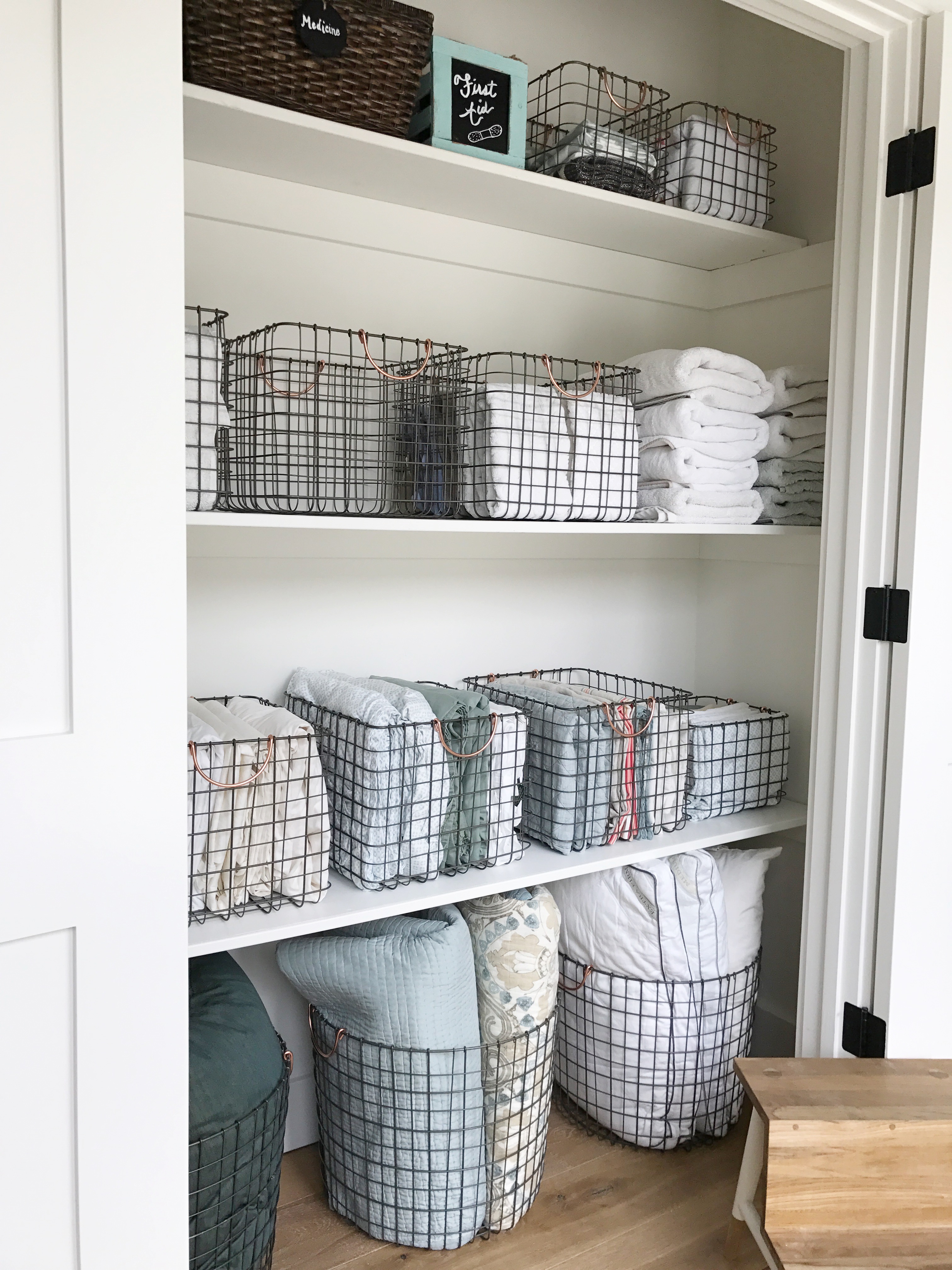
To choose how to organize a linen closet layout, measure shelves and door space. Note height, depth, and width. Typical shelf depths of 12–16 inches fit towels well. Leave some open space for airflow.
Map zones on paper:
- Daily zone: middle shelves for grab-and-go towels and sheets.
- Seasonal zone: top shelves for quilts and guest sets.
- Heavy zone: lower shelves for bulk paper goods or bins.
- Door zone: over-the-door rack for light items like washcloths or pillowcases.
Pro move: Tape labels on the shelf edge while you plan. It keeps you focused and prevents random stacking.

Step 3: Choose smart storage solutions
Products matter when you plan how to organize a linen closet. Start with what you have. Then add a few upgrades if needed.
Good picks:
- Clear bins with lids for pillowcases, washcloths, and table linens.
- Open baskets for towels you use daily.
- Shelf dividers to prevent tall stacks from toppling.
- Over-the-door pockets for small items.
- Label clips or painter’s tape for flexible naming.
Aim for breathable materials. Avoid sealed plastic bags that trap moisture. If your closet is humid, place a small dehumidifier packet and keep humidity near 45–50% for freshness.

Step 4: Fold, roll, and set size standards
Folding standards are key to how to organize a linen closet well. Use one fold style per category so stacks look uniform.
Easy folding rules:
- Bath towels: fold in thirds lengthwise, then in thirds again.
- Hand towels and washcloths: fold in halves, then in thirds to match bin width.
- Sheets: fold to the width of your shelf; bundle each fitted sheet with its flat sheet and two pillowcases.
- Bulky items: roll blankets and duvets to save space and prevent creases.
Tip from the field: Store each bed’s set in one pillowcase. Pull and go. No guesswork.
Step 5: Labeling, inventory, and restock system
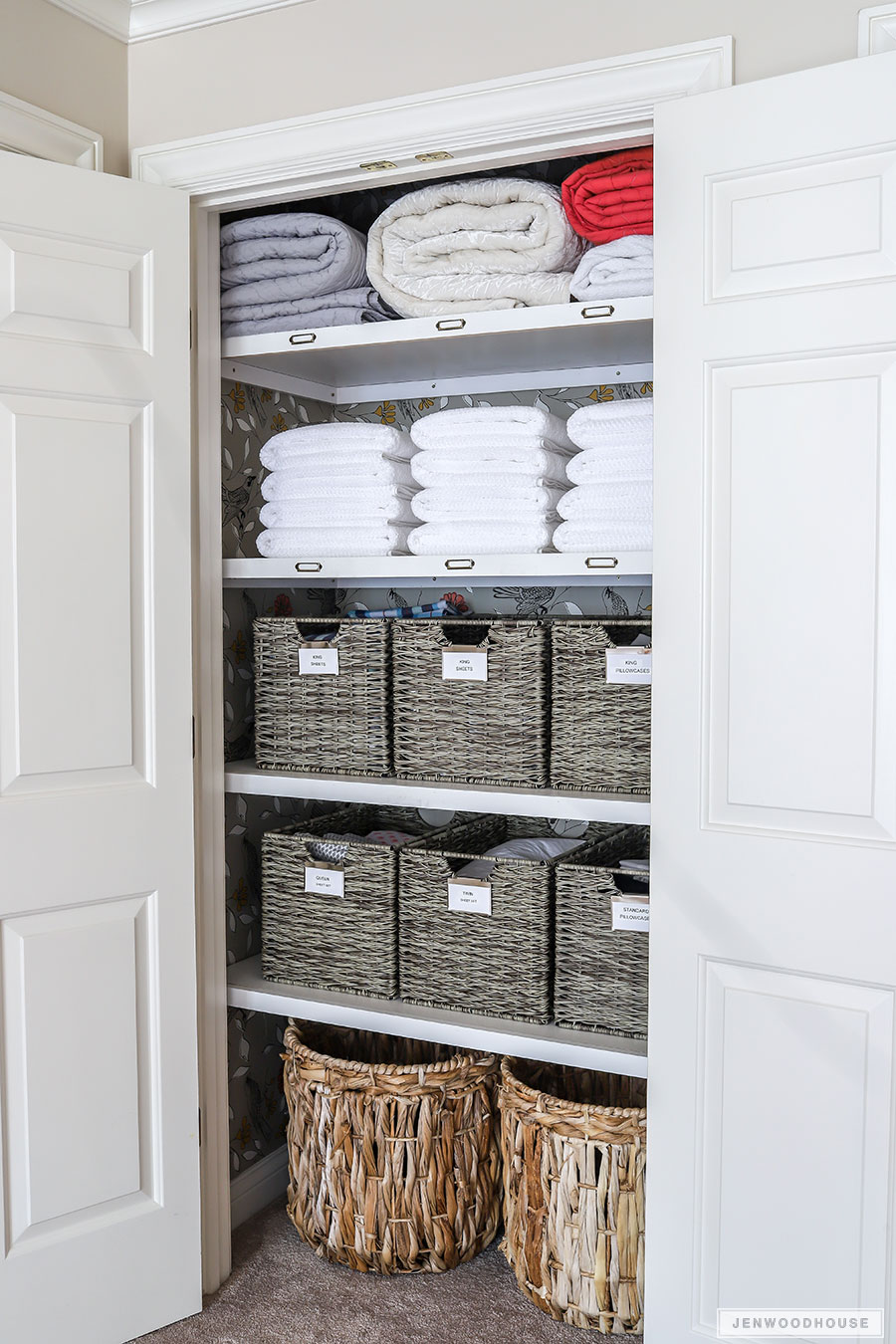
Labels lock in how to organize a linen closet long term. Use simple words and big fonts. Label shelves and bins on the front edge.
Set par levels:
- Towels: two sets per person in the active zone; extras up top.
- Sheets: two sets per bed; one flannel or cooling set as seasonal backup.
- Guest kit: one full set sealed in a breathable zip case.
Keep a small list on the door for restocks like detergent, stain remover, or tissue. Snap a photo before shopping.
Organize by household needs: families, guests, and small spaces
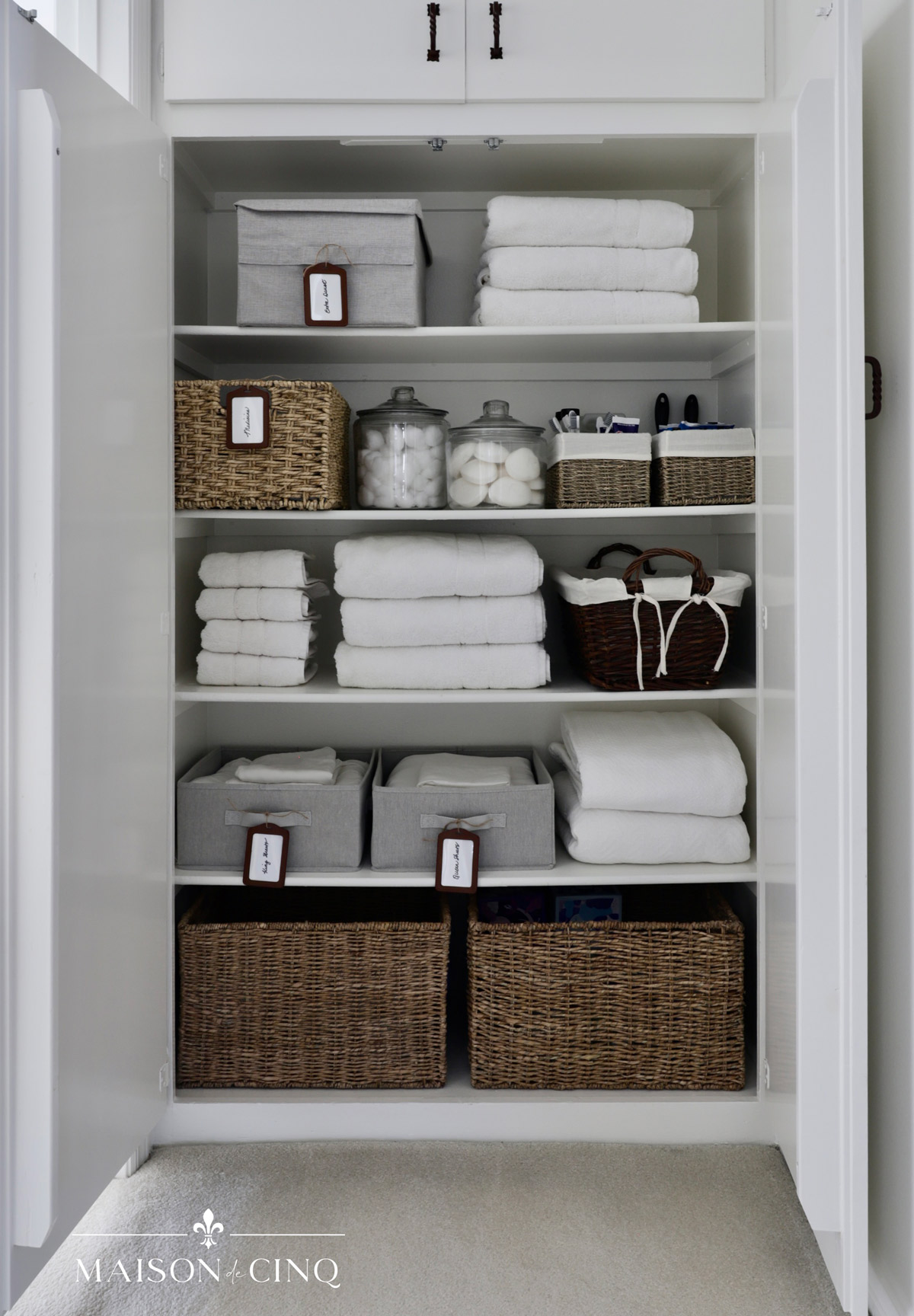
For families, how to organize a linen closet means zones by person. Color-code towels by family member. Put kid towels on lower shelves. Keep guest sets high and labeled.
In small closets, think vertical and slim:
- Door racks for washcloths and pillowcases.
- Slim bins for napkins and table runners.
- Vacuum bags only for long-term storage, not daily use.
Case note: I once helped a family of five. We gave each person a color and a shelf half. Morning chaos dropped fast because everyone knew their zone.

Care, hygiene, and safety tips
Hygiene plans are part of how to organize a linen closet. Wash towels every 3–4 uses and sheets every 1–2 weeks. Rotate sets so wear is even.
Keep it fresh:
- Let towels cool before shelving to avoid trapped moisture.
- Use fragrance-free sachets if you have sensitive skin.
- Aim for indoor humidity near 45–50% to deter musty smells.
Safety basics:
- Store cleaning chemicals elsewhere, not with linens.
- Keep heavier bins low to prevent falls.
- Use child-safe latches if little hands explore.

Source: youtube.com
Maintenance: 10-minute monthly routine
Your routine cements how to organize a linen closet for good. Set a calendar reminder. It should take 10 minutes.
Monthly tune-up:
- Refold messy stacks and face label sides out.
- Check par levels and restock a missing set.
- Wipe shelves and swap a dehumidifier packet if needed.
- Pull one donate item if stacks feel tight.
Seasonal swap: Move quilts and flannels up or down based on weather.
Budget and sustainable tips
On a budget, you can choose how to organize a linen closet with repurposed bins. Shoe boxes, shallow pantry bins, and old baskets work well. Add tape labels to keep it clear.
Go greener:
- Keep only what you use. Less laundry equals less water and energy.
- Choose organic cotton or linen when replacing sets.
- Repair small tears and loose hems before they spread.
Simple truth: The best system is the one you can maintain. Spend where it solves a real problem, not just for pretty bins.
Common mistakes to avoid
Avoid these errors when learning how to organize a linen closet.
- Overstuffing shelves so stacks topple.
- Skipping labels, which leads to random mixing.
- Storing damp items, which causes odor and mildew.
- Buying bins before measuring, so they don’t fit.
- Hiding guest sets under daily towels, making them hard to find.
Frequently Asked Questions of How to Organize a Linen Closet
How many towel sets should I keep per person?
Two everyday sets per person is ideal, plus one guest set per bathroom. Adjust if you have frequent visitors or long laundry cycles.
What is the best way to fold fitted sheets?
Fold the elastic corners into each other to form a rectangle. Then fold to the shelf width and bundle with the flat sheet and pillowcases.
How do I stop towels from smelling musty?
Let towels dry fully before shelving and avoid overpacked stacks. Keep humidity near 45–50% and wash with a hot cycle when needed.
Should I store bedding by size or by room?
Store by bed or room for the fastest grab-and-go. Label each bundle with the room name, like “Guest Queen” or “Kids Twin.”
How can I organize a tiny linen closet?
Use door racks, slim bins, and strict par levels. Keep only what you use weekly and rotate seasonal items to higher shelves.
Conclusion
You now have a clear, simple plan to turn chaos into calm. Measure, declutter, zone, fold with standards, and lock it in with labels. Keep a short routine, and your closet will reset itself after every wash.
Try one step today, even if it’s only labeling two shelves. Then build from there. If this guide helped, share it with a friend, subscribe for more home tips, or drop a comment with your closet win.