Tighten loose screws, repair stripped holes, or use longer screws into the stud.
If a door drags, rattles, or squeaks at the hinge, you can fix it fast with a few tools and simple steps. I’ve repaired hundreds of doors in homes, rentals, and job sites. In this guide, I’ll show you How to Fix a Loose Door Hinge the right way, explain why it came loose, and help you prevent it from coming back.
What Causes a Loose Door Hinge
A loose hinge is simple. The screws no longer hold tight in the wood or the hinge is out of line. That can come from heavy use, soft wood, or the wrong screw size. Humidity and seasonal movement can also shift the frame.
Common causes:
- Stripped screw holes that no longer grip.
- Short factory screws that miss the wall stud.
- Warped frame or door from moisture.
- Worn hinge pin or bent hinge leaf.
- Settling house or loose shims in the jamb.
Knowing why it happened makes How to Fix a Loose Door Hinge easier and longer lasting.

Tools and Materials You’ll Need
You can fix most doors with basic tools. Gather these before you start so you are not stuck mid-job.
- Screwdriver or drill with a clutch.
- Wood screws: #9 or #10, 2.5 to 3 inches for jamb side; #8, 1 to 1.25 inches for door side.
- Drill bits for pilot holes. A bit slightly smaller than the screw’s core.
- Wood glue and hardwood toothpicks or small dowels.
- Utility knife and a sharp chisel.
- Hinge shims or thin card stock (business card thickness).
- Painter’s tape and a pencil for marking.
- Level, tape measure, and a small square.
- Wood filler or epoxy for bigger voids.
- Door wedge or a helper to support the door.
- Light lubricant for the hinge pin.
- Threadlocker (optional) for screws that work loose.
These items cover all standard fixes for How to Fix a Loose Door Hinge in a safe and clean way.
Quick Fixes You Can Try First
Start simple. Many doors only need one or two fast moves.
- Snug the screws. Support the door with a wedge. Tighten each hinge screw until firm. Do not over-tighten.
- Swap one short jamb screw for a long one. Aim a 2.5 to 3 inch screw through the hinge and jamb into the wall stud. This lifts the door back up.
- Add a drop of threadlocker. This helps if screws back out over time.
- Lube the hinge pin. A tiny bit of silicone or white lithium can quiet noise and ease strain.
- Shim the hinge. If the gap is uneven, slip a thin shim behind a hinge leaf to true the reveal.
If these hold, you have learned How to Fix a Loose Door Hinge in minutes. If not, use the full repair steps below.

Step-by-Step: How to Fix a Loose Door Hinge
Use this path when screws spin, holes are blown out, or the door still sags.
- Diagnose the problem
- Close the door and check the gap around it. A larger gap at the top latch side points to a loose top hinge.
- Wiggle the door near each hinge. If you feel play, note which screws spin or which leaf moves.
- Support the door
- Place a wedge under the door to take weight off the hinges. I also leave one center screw in each hinge while working. It keeps the door aligned.
- Replace a short jamb screw with a long screw
- On the top hinge jamb side, remove the center screw.
- Drill a pilot hole aimed slightly toward the stud behind the jamb. For a #9 or #10 screw, pick a bit that matches the screw’s core.
- Drive a 2.5 to 3 inch screw until snug. You should feel it bite the stud. This lifts the door and locks the hinge to structure.
- Repeat on the bottom hinge if needed to prevent twist.
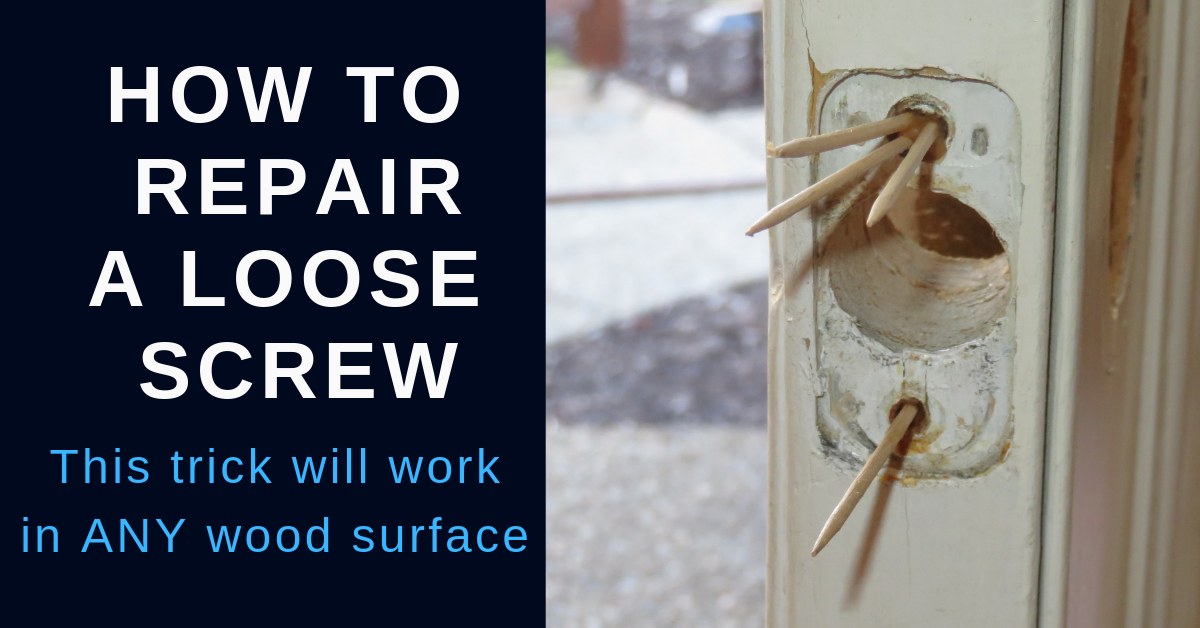
- Repair stripped screw holes with toothpicks or dowels
- Remove loose screws from the bad holes.
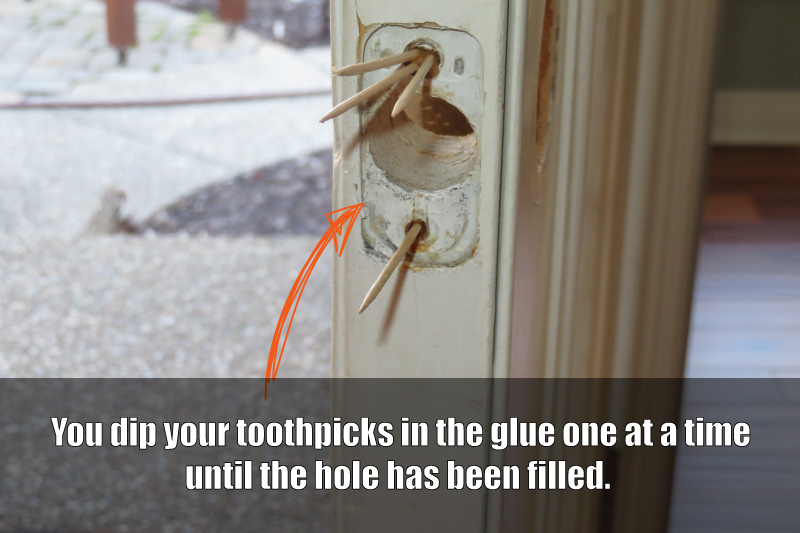
- Coat hardwood toothpicks with wood glue. Pack them tight in the hole.
- Snap them flush. Let the glue set for 10 to 20 minutes, or per label.
- Re-drill a fresh pilot hole in the center. Reinstall the screw. This quick fix is cheap and strong. I’ve used it for years with great results.
- Use a wood dowel or epoxy for larger damage
- For a big, blown-out hole, drill it clean to a known size (like 3/8 inch).
- Glue in a matching hardwood dowel. Clamp if you can. Let it cure fully.
- Re-drill a pilot hole and set a fresh screw. Epoxy wood repair also works well in soft or punky wood.
- Shim to correct misalignment
- If the reveal is tight on the hinge side or latch does not catch, add a thin shim behind the leaf.
- Place it on the jamb or door side as needed to nudge alignment. Ready-made hinge shims make this fast and neat.
- Replace worn or bent hinges
- Check the hinge pin. If the pin or knuckles are sloppy, replace the hinge.
- Match size: 3.5 inch hinges are common for interior doors; 4 inch for heavier or exterior doors.
- Use quality hinges. Ball-bearing hinges help on heavy or high-traffic doors.
- Reset the hinge mortise if needed
- If the leaf sits proud, the hinge is too thick. Lightly pare the mortise with a sharp chisel.
- If the mortise is too deep, backfill with a thin wood shim and glue. Then re-screw.
- Final checks
- Close and open the door a few times. The latch should align and the reveal should look even.
- Re-snug all screws. Wipe any squeeze-out glue. A dab of wax on screw threads can ease future removal.
This is the core of How to Fix a Loose Door Hinge. It blends longer screws for structure and solid repairs for stripped wood. It also aligns the door so the fix lasts.
Pro tips from the field:
- Always drill pilot holes. It prevents splitting and gives a strong bite.
- For the top hinge, a long screw into the stud is the single best upgrade.
- Keep screws matched to hinge finish so the result looks clean.
Safety notes:
- Do not force long screws if you feel a pipe or wire behind the jamb. Most hinges sit on the stud side, but feel for solid resistance and proceed with care.
- Follow cure times on glue and epoxy. Rushing weakens the fix.

How to Fix a Loose Door Hinge on Different Door Types
Not all doors behave the same. Adjust your approach based on the build.
- Hollow-core interior door: Use care on the door leaf. Use #8 screws and solid pilot holes to avoid blowout. Toothpick-and-glue repairs work great here.
- Solid wood door: Heavier doors need stronger hinges and long screws. Use at least one 3 inch screw in the top hinge into the stud. Consider ball-bearing hinges.
- Steel or fiberglass door with wood stiles: The hinge screws usually go into a wood stile behind the skin. Use sharp pilot holes and quality screws. Avoid self-tappers in thin metal skins for hinge leaves unless the design calls for it.
- Old or soft jambs: If wood is crumbly, switch to epoxy wood repair or a dowel for strength. Then add a long screw to the stud.
These tweaks help you master How to Fix a Loose Door Hinge on any setup you meet at home.

When the Loose Hinge Means Bigger Problems
Sometimes the hinge is not the only issue. Look for these red flags.
- The gap is even at the top but the latch still misses. The frame might be out of plumb. Long screws into the stud can pull it back.
- You cannot find a stud. Some older doors were shimmed with a gap behind the jamb. Use 3 inch screws and aim for the stud. If you still miss, you may need to remove trim and add proper blocking.
- Wood rot or termite damage. Do not rely on screws in rotten wood. Repair or replace the damaged section first.
- Severe seasonal swelling. If humidity warps the door, hinge fixes help, but you may also need to plane edges or improve home humidity control.
In these cases, How to Fix a Loose Door Hinge includes checking the structure. Fix the root cause, and your door will stay true.
Preventive Care and Maintenance
A little care prevents loose hinges in the first place.
- Check hinge screws twice a year. Snug them before they back out.
- Add one long screw to the top hinge even if all feels fine. It is cheap insurance.
- Lube the hinge pin lightly when you hear squeaks. Less friction means less pull on screws.
- Always use pilot holes when changing screws. It protects the wood and improves grip.
- Match hardware quality to door weight. Heavy doors often need three hinges and long screws.
Follow these habits and you will rarely need to look up How to Fix a Loose Door Hinge again.

Real-World Examples and Lessons Learned
From my own jobs, a few stories stand out.
Case 1: A rental had a door that scraped the floor. Three short factory screws on the top hinge had chewed the jamb. I glued toothpicks in all three holes, swapped the center jamb screw for a 3 inch screw into the stud, and the door lifted back to level. Ten minutes, zero callbacks.
Case 2: A heavy oak door in a 1920s home sagged a half inch. The top hinge pin was fine, but all jamb screws missed the stud due to old, wide shims. Two new 3 inch screws angled to the stud and a thin shim behind the middle hinge fixed the reveal. The latch lined up perfect.
Case 3: A bathroom door kept loosening in damp air. After one last repair, I sealed screw holes with thin CA glue before re-drilling pilots, then used threadlocker. It stayed tight through two summers.
These examples show How to Fix a Loose Door Hinge with simple, strong moves. The lesson is clear: get a solid bite into real structure, repair the wood right, and align the door.

Frequently Asked Questions of How to Fix a Loose Door Hinge
What size screws should I use for a door hinge?
Use #9 or #10 screws that are 2.5 to 3 inches for the jamb side. Use #8 screws around 1 to 1.25 inches for the door side.
Can I fix stripped screw holes without removing the door?
Yes. Support the door with a wedge. Remove one screw at a time, repair the hole with glued toothpicks or a dowel, and reinstall.
Will cardboard shims really help a sagging door?
Yes, thin shims can tweak alignment. Place a shim behind the correct hinge leaf to even the reveal and improve latch fit.
How do I know if I hit the wall stud with a long screw?
You will feel firm resistance as you drive the screw and the door will lift slightly. If the screw spins with little bite, you likely missed the stud.
Should I replace the hinge or only the screws?
Start with screws and hole repairs. Replace the hinge if the pin or knuckles are worn, bent, or noisy after lubrication.
Is wood filler strong enough for hinge screws?
For small gaps, yes. For larger or load-bearing repairs, use hardwood dowels or epoxy wood repair for better strength before re-drilling.
How often should I check my door hinges?
Check them twice a year, or any time you hear squeaks or see a crooked gap. Snugging early prevents bigger repairs later.
Conclusion
You now know How to Fix a Loose Door Hinge with simple tools and clear steps. Tighten what you can, repair the wood so screws grip, and use at least one long screw into the stud. Align the door with a shim if needed and your fix will last.
Take 15 minutes today and tune your most used door. If this helped, share it with a friend, subscribe for more hands-on home tips, or drop a comment about what worked for you.