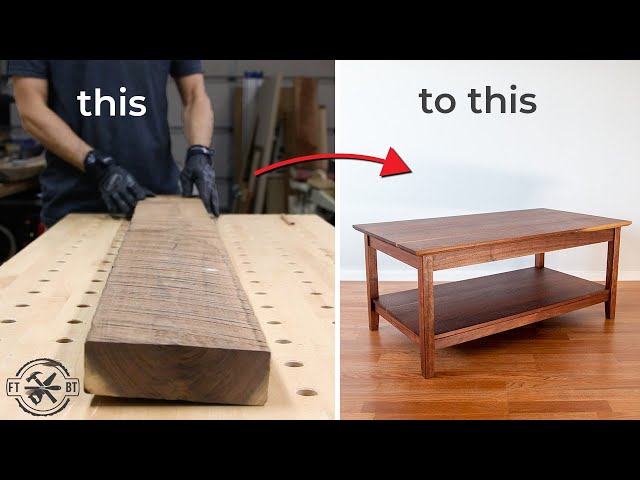
Build a sturdy coffee table with basic tools, solid wood, and clear steps.
You can learn how to build a coffee table that looks custom, lasts for years, and fits your space. I have built many for clients and my own home. In this guide on how to build a coffee table, I share an easy plan, clear steps, pro tips, and fixes for common mistakes so you can build with skill and confidence.

Plan Your Coffee Table
Start with the room. Measure your sofa and the open floor area. A good coffee table height is 16 to 18 inches. Aim for a length that is about two-thirds the width of your sofa. Keep 16 to 18 inches of walk space around the table.
Decide the style. You can go modern, farmhouse, mid-century, or live edge. A simple top with four legs is the fastest path. An apron with stretchers adds strength. If you want a bold look, try a thick slab top and metal legs.
Choose your wood. Pine and poplar are budget friendly and easy to sand. Oak and maple are harder and very strong. Walnut looks rich and takes oil well. Plywood with edge banding is a smart, stable choice for a flat top.
Think about how to build a coffee table that fits your life. Do you need hidden storage? A shelf for books? A big, kid-proof top? The plan you choose should match how you live. If you keep the design simple, the build goes faster and cleaner.

Materials and Tools
Here is what you need for a basic wood table with an apron and four legs.
Materials:
- Lumber for the top, apron, and legs
- Wood glue
- Pocket hole screws or wood dowels
- Sandpaper in 120, 180, 220 grits
- Finish: oil, polyurethane, or hardwax oil
- Felt pads or leveling feet
- Optional: metal hairpin legs, plywood for a shelf
Tools:
- Tape measure, square, and pencil
- Miter saw or circular saw with a guide
- Drill and driver bits
- Pocket hole jig or dowel jig
- Clamps (bar or pipe clamps)
- Orbital sander and sanding block
- Safety gear: glasses, ear plugs, dust mask
I like to keep tools simple when I show people how to build a coffee table. A circular saw with a straightedge, a drill, and good clamps can do great work.
Cut List, Dimensions, and Design Options
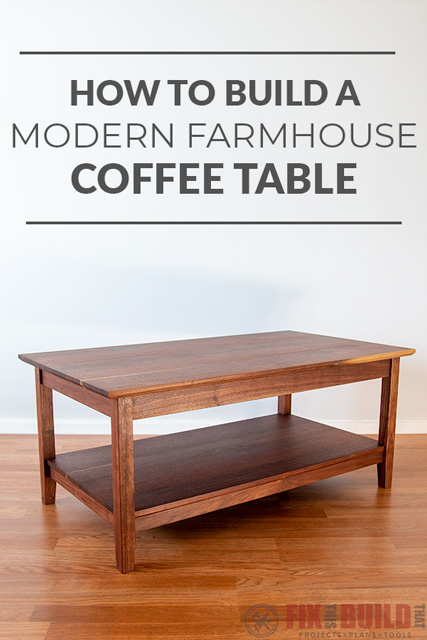
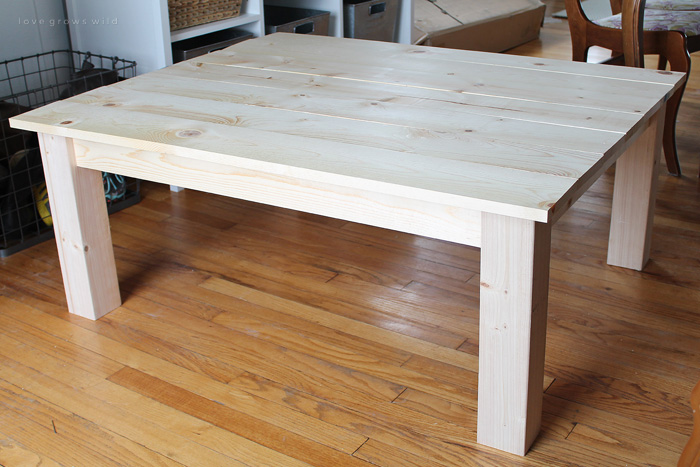
Here is a sample cut list for a 48 x 24 x 17 inch table with a 3 inch apron and 1 inch thick top:
- Top boards: 2 to 4 boards to glue up to 48 x 24 x 1 inches
- Long apron: 2 pieces at 41 inches by 3 inches by 1 inch
- Short apron: 2 pieces at 17 inches by 3 inches by 1 inch
- Legs: 4 pieces at 16 inches by 2 inches by 2 inches
- Optional lower shelf: 44 x 20 inches, 0.75 inch thick plywood
Design tweaks:
- Mid-century look: 1 inch thick top, 10 to 12 degree splayed legs
- Farmhouse: thicker top (1.5 inches), chunky square legs
- Modern: slab top, metal base or hairpin legs
- Storage: add a drawer in the apron or a shelf between stretchers
These sizes follow standard living room rules. They also make it easy when you learn how to build a coffee table for the first time. Adjust the numbers to match your sofa and rug.

Step-by-Step: How to Build a Coffee Table
Follow this clear path. Simple steps lead to a clean build.
- Mill and cut
- Mark all parts with a pencil. Add part names and arrows for grain direction.
- Rough cut boards a bit long. Let wood rest a few hours to ease stress.
- Trim to final length and width. Check for square on every cut.
- Glue up the top
- Arrange boards so the grain looks good. Flip every other board to balance cup.
- Spread glue edge to edge. Clamp with light, even pressure. Wipe squeeze-out.
- Let cure per glue label. Scrape seams. Sand flat at 120 grit.
- Build the base
- Drill pocket holes on the apron ends or mark dowel holes.
- Attach the short aprons to legs. Check 90 degrees with a square.
- Add the long aprons. Measure corner to corner to avoid racking.
- Add a shelf or stretchers (optional)
- Cut stretchers to fit between legs low on the frame.
- Glue and secure. This makes the base very stiff.
- Attach the top
- Center the base on the underside of the top.
- Use figure-8 fasteners or slotted holes in the apron to let wood move.
- Drive screws snug, not hard. Wood needs room to expand and shrink.
- Sand and break edges
- Sand 120, then 180, then 220. Keep the sander moving.
- Round sharp corners with a few hand passes. It feels better and chips less.
- Finish
- Raise the grain with a damp cloth. Light sand at 220.
- Wipe on stain if you want color. Let dry.
- Apply oil or poly in thin coats. Sand light between coats if needed.
When I teach how to build a coffee table to a first-time builder, I stress a dry fit. Put the base together with no glue first. You will spot gaps and avoid a rush when the glue is open.
Joinery and Strength Choices
You have many joinery paths. Pick one that fits your tools and time.
- Pocket holes. Fast, strong enough for aprons. Hide the holes inside.
- Dowels. Clean look and very strong with a jig.
- Mortise and tenon. Classic, pro level, rock solid. Great for heirloom builds.
- Domino or loose tenon. Fast and precise if you have the tool.
- Screws with brackets for metal legs. Simple and solid if you pick good hardware.
If you plan to build more than one table, learn dowels or mortise and tenon. It lifts your game. It also makes how to build a coffee table feel like true craft work.

Sanding, Staining, and Finish
A good finish turns a nice build into a keeper.
- Sand smart. Do not skip grits. Vacuum dust between grits.
- Test on a scrap. Stain can blotch on pine. A pre-stain conditioner helps.
- Choose a finish that fits life. Oil feels warm but needs care. Poly is tough and easy to clean. Hardwax oil is a balanced choice and safe once cured.
For families, I like water-based polyurethane in satin. It dries fast and keeps wood color close to natural. This is a safe pick when you show others how to build a coffee table that will take daily use.
Safety, Budget, and Time
Work safe. Use glasses, ear plugs, and a dust mask. Clamp boards before cutting. Keep cords clear. Let finish cure with good airflow.
Budget
- Pine or poplar with wood legs: about $60 to $120
- Oak or maple with wood legs: about $120 to $220
- Walnut or metal base: about $180 to $350
Build time
- Basic design: one weekend
- With shelf or drawers: two to three weekends
If you want to know how to build a coffee table on a tight budget, pick pine, a simple apron, and hairpin legs. It looks great and cuts hours off the job.

Common Mistakes and How to Fix Them
- Wobbly base. Check for racking. Measure corner to corner. Add a stretcher or trim legs to match length.
- Cupped top. Flip boards in the glue up. If it cups, add battens with slotted holes under the top.
- Blotchy stain. Use a wood conditioner on softwoods. Or skip stain and use a clear oil.
- Visible screw holes. Place pocket holes on the inside. Use plugs and sand flush.
- Drips in finish. Wipe thin coats. Watch under edges. Sand and recoat if needed.
I learned the hard way that rushing glue-ups is a trap. Lay out clamps and rags first. When you know how to build a coffee table the right way, prep saves the day.

Care and Upgrades
Keep the table looking sharp.
- Use coasters and felt pads under decor.
- Wipe spills fast. Avoid harsh cleaners.
- Refresh oil once or twice a year if you used an oil finish.
Easy upgrades when you build your next one:
- Add a drawer for remotes.
- Use a chamfer or round-over bit for pro edges.
- Try contrasting woods for the top and base.
These small moves make how to build a coffee table a path to real skill. Your second build will be faster and even cleaner than your first.
Frequently Asked Questions of How to Build a Coffee Table
What is the best wood for a coffee table?
Oak, maple, and walnut are durable and stable. Pine and poplar cost less and work well if you plan a painted or rustic look.
How tall should a coffee table be?
Aim for 16 to 18 inches high. Match the seat height of your sofa for comfort.
Do I need special tools to build a coffee table?
No. A circular saw, drill, clamps, and a sander are enough. A pocket hole jig or dowel jig makes clean joints.
How do I attach the top so it can move?
Use figure-8 fasteners or slotted holes in the apron. Wood expands across the grain, so allow a little side-to-side play.
What finish holds up best for kids and spills?
Water-based polyurethane in satin is tough and easy to clean. Hardwax oil also does well and is simple to touch up.
How long does it take to learn how to build a coffee table?
Most people finish a simple table in a weekend. Add more time for drawers, shelves, or complex joinery.
Can I build a coffee table without an apron?
Yes. Use a thick top and solid legs or a metal base. Make sure the leg hardware is strong and well placed.
Conclusion
You now have a clear plan, a simple cut list, and proven steps. You also know the key tips that pros use, plus fixes for errors that can show up during a build. This is how to build a coffee table that is sturdy, stylish, and made to last.
Pick a design, set your size, and gather your tools. Start with a simple base and a clean top. By next week, your living room can have a table you built with your own hands. Want more guides like this on how to build a coffee table and other weekend projects? Subscribe, share your progress, or drop a question in the comments.